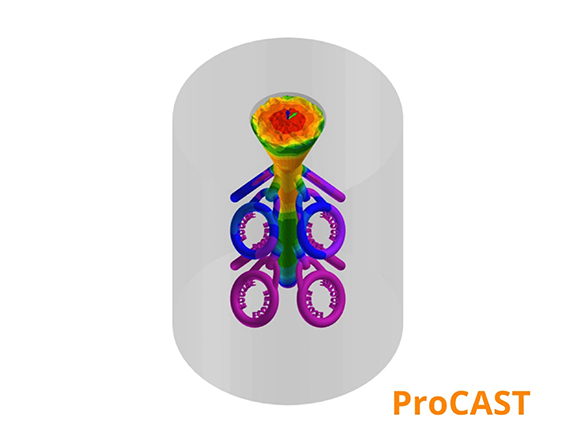
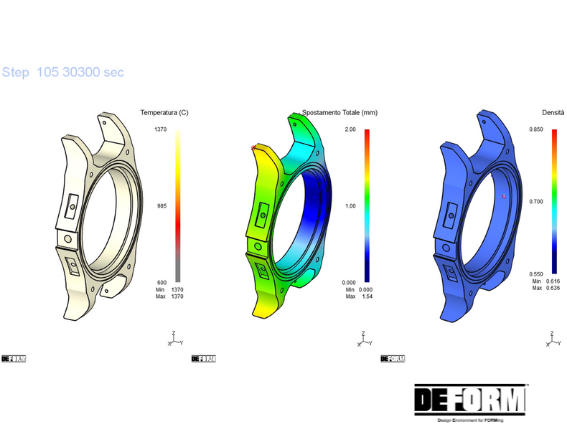
https://www.youtube.com/watch?v=X0A57FXDams Lost-wax casting is a technique that dates back to ancient times. Among the best-preserved examples from antiquity are the Bronzes of Riace. The lost-wax casting method is used in the fashion and jewellery industry: a reproduction of the piece is created in wax or using 3D printing. Additional pieces, casting channels and uprights are… Continue reading Micro casting
DEFORM Benefits Quality improvement Optimization and saving in the design Improvement of production Enhanced precision Flexibility of use Reduction of calculation times Reduction of production rejects Saves money Machining of Milling: What it is Milling is a mechanical swarf removal process allowing to obtain a wide range of surfaces, cuts, incisions, cavities, shapes and holes… Continue reading Milling
DEFORM Benefits Quality improvement Optimization and saving in the design Improvement of production Enhanced precision Flexibility of use Reduction of calculation times Reduction of production rejects Saves money Metal Forging: What it is Forging is a massive deformation process carried out hot to give metal semi-finished products their final shape and size. Forging can be… Continue reading Open Die Forging
DEFORM Benefits: Quality improvement Optimization and saving in the design Improvement of production Enhanced precision Flexibility of use Reduction of calculation times Reduction of production rejects Saves money Heat Treatments of Quenching and Tempering: What it is Quenching and Tempering is a heat treatment used to obtain high hardness/strength of steel. It consists of austenitizing,… Continue reading Quenching and Tempering
QuikCAST and ProCAST Software Benefits Quality improvement Optimization and saving in the design Improvement of production Enhanced precision Flexibility of use Reduction of calculation times Reduction of production rejects Saves money Thixocasting, rheocasting and SSR: What it is Thixocasting and rheocasting processes produce high-quality castings with filling of metal both in the semi-solid state and… Continue reading Rheocasting-Thixocasting
DEFORM Benefits Quality improvement Optimization and saving in the design Improvement of production Enhanced precision Flexibility of use Reduction of calculation times Reduction of production rejects Saves money Ring Rolling of metals: What it is The Ring Rolling process is a machining method in which a very thick ring, placed between two groups of rollers,… Continue reading Ring Rolling
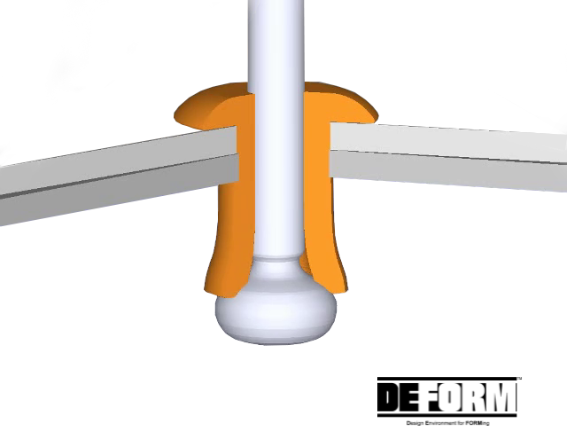
DEFORM Benefits: Cost reduction Reduction of rejects Improved production Reduction of production and delivery times Improved component design Better component efficiency Longer die life Riveting: what it is Riveting is a process by which two elements are joined by means of a tubular, semi-tubular or blind rivet. It allows different materials and components to be… Continue reading Riveting
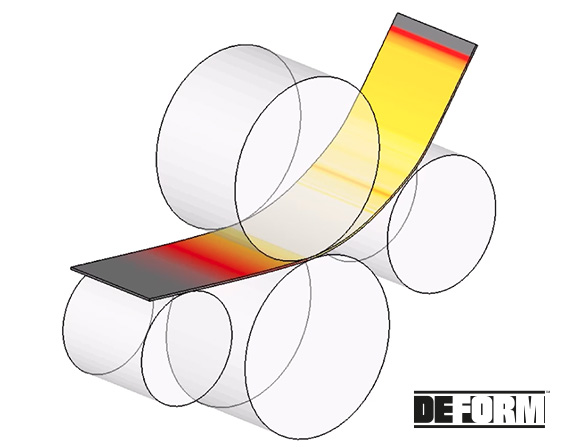
Roll bending Roll bending is an essential forming process used to give precise and uniform curvatures to aluminium and steel sheets. This method is based on the controlled action of synchronized rolls that progressively bend the material until the desired shape is achieved. It is a particularly important process for the production of components destined… Continue reading Roll Bending
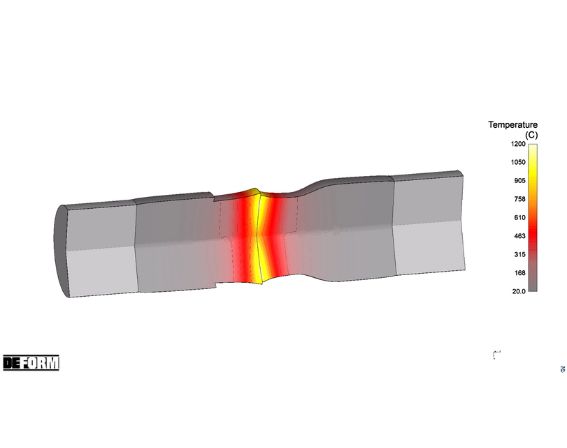
Benefits with DEFORM High-quality welded products Elimination of rejects and reduction of defects Elimination of sampling Improved mechanical properties of the part Greater part strength Reduced welding times Reduced welding costs DEFORM simulates the welding process known as “Rotary Friction Welding” Rotary Friction Welding (RFW) is a well-established technology capable of joining metallic materials through… Continue reading Rotary Friction Welding
DEFORM Benefits Quality improvement Optimization and saving in the design Improvement of production Enhanced precision Flexibility of use Reduction of calculation times Reduction of production rejects Saves money Shape Rolling of metals: What it is Shape Rolling is a plastic deformation process through which the material passes between rotating cylinders (rollers), smooth or shaped, that… Continue reading Shape Rolling
DEFORM Benefits Reduction of prototype production and physical tests Elimination of rejects and reduction of defects Elimination of samplings Less time in development of new components Less time in producing new or already existing components Lower design and production costs Reduction of material waste Better understanding of the component before being designed Elimination of defects… Continue reading Sheet Metal Forming
DEFORM Benefits cost reduction reject reduction production and delivery time reduction component design improvement component efficiency improvement improved die duration Control shot peening: What it’s Control shot peening is a process whose purpose is to increase the resistance to fatigue and corrosion of metal pieces. The controlled shot peening process essentially consists in subjecting the… Continue reading Shot Peening
DEFORM Benefits: Quality improvement Optimization and saving in the design Improvement of production Enhanced precision Flexibility of use Reduction of calculation times Reduction of production rejects Saves money Sintering: What it is Sintering is a thermomechanical process in which a porous material with low mechanical properties obtained by powder pressing (commonly called green-part) is subject… Continue reading Sintering
DEFORM Benefits Greater mechanical strength Resistance to corrosion Less residual stresses Heat Treatments of Soaking and Aging: What it is The solution Soaking and Aging process is a heat treatment by precipitation mainly dedicated to aluminum and nickel alloys and austenitic stainless steel. The component is heated at high temperatures so as to guarantee full… Continue reading Soaking and Aging
DEFORM Benefits High quality rolled products Elimination of rejects and reduction of defects Elimination of samplings Improved mechanical features of the workpiece Reduction of load on areas with greater mechanical stress Greater tool strength Reduced production times Reduced production costs Threading: What it is Threading is a mechanical process that does not entail removal of… Continue reading Threading
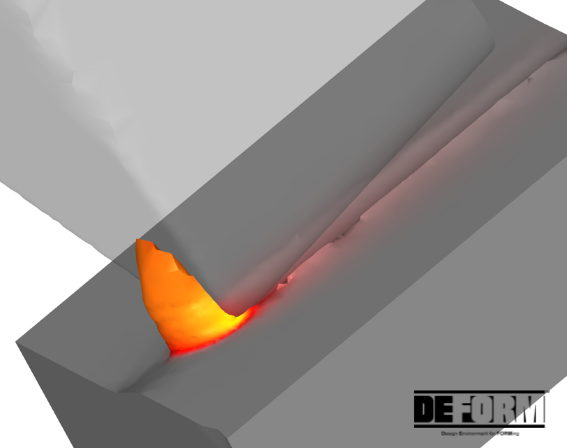
DEFORM Benefits Quality improvement Optimization and saving in the design Improvement of production Enhanced precision Flexibility of use Reduction of calculation times Reduction of production rejects Saves money Trimming & Shearing Simulation: What & how it works Trimming & shearing is a process consisting the separation a sheet, plate or tubular component by cutting it… Continue reading Trimming & Shearing
DEFORM Benefits Quality improvement Optimization and saving in the design Improvement of production Enhanced precision Flexibility of use Reduction of calculation times Reduction of production rejects Saves money Machining of Turning: What it is Turning is a mechanical swarf removal process characterised by a rotary motion of the workpiece and a mostly straight motion of… Continue reading Turning
QuikCAST and ProCAST Software Benefit Quality improvement Optimization and saving in the design Improvement of production Enhanced precision Flexibility of use Reduction of calculation times Reduction of production rejects Saves money Vacuum High Pressure Die Casting: What it is During the die casting process, the air present and the gases produced are hard to exhaust… Continue reading Vacuum High Pressure Die Casting